 HazelJS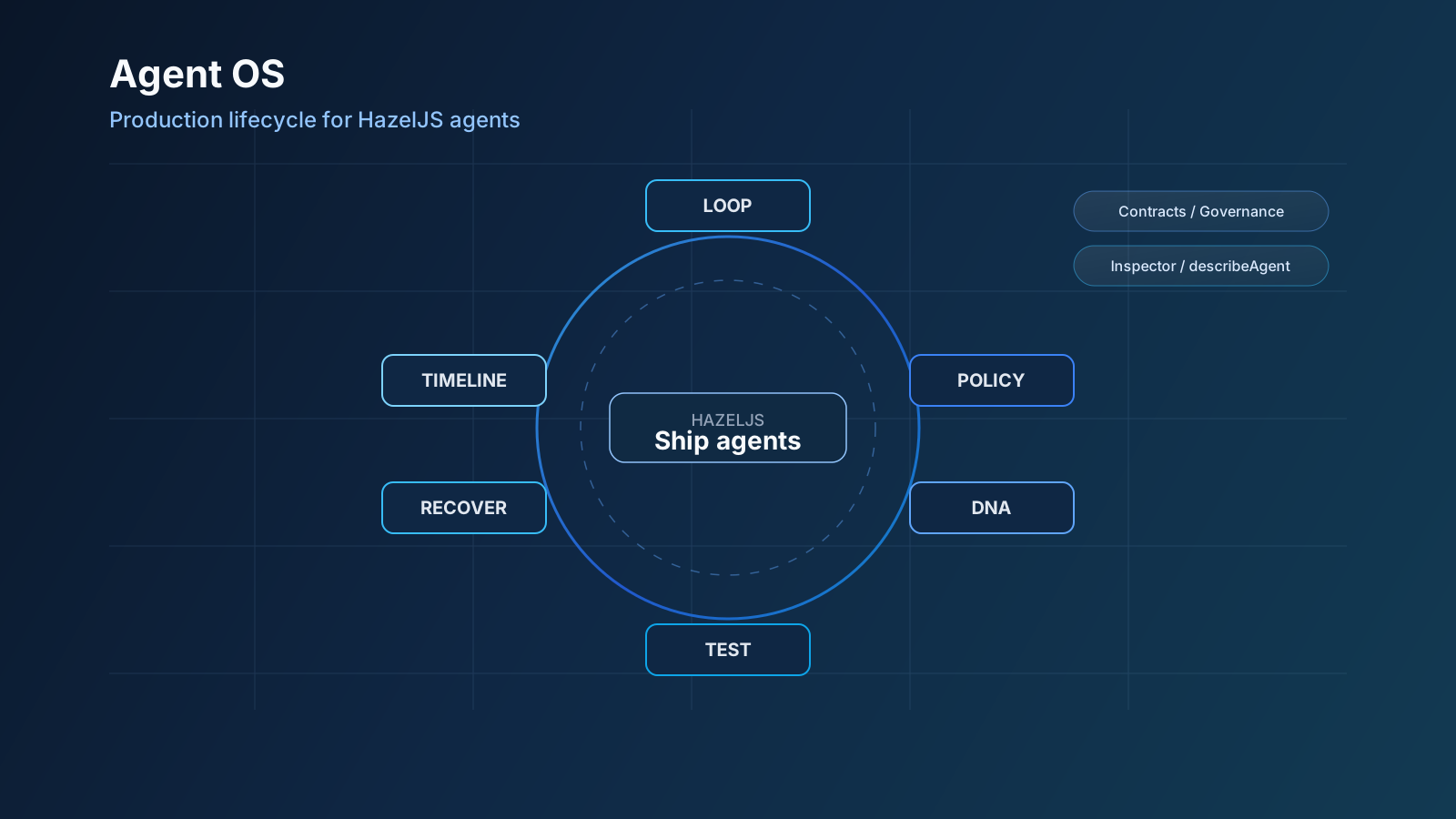
What is an Agent OS? (HazelJS)
Agent OS is the production lifecycle for AI-native TypeScript agents inside a Node backend — durable runs, Skillgate, policies, DNA — not a bare-metal OS.
Agent OS is the production lifecycle for AI-native TypeScript agents inside a Node.js backend: durable runs, policies, contracts, recovery, DNA, Skillgate, Inspector timelines, and CI tests — not a bare-metal operating system and not a Python-only governance kernel.
HazelJS ships Agent OS in @hazeljs/agent so agents behave like product features you can restart, lease, govern, and test — not one-off chat scripts.
Agent OS vs agent frameworks
Libraries like LangGraph orchestrate graphs and state machines. That is valuable. An Agent OS adds the surrounding lifecycle:
| Concern | Typical graph / chain lib | HazelJS Agent OS |
|---|---|---|
| Crash mid-HITL | Often in-memory / process-bound | Durable suspend + SQL/file AgentRun |
| Multi-worker safety | DIY locks | Worker leases + reclaim |
| Tool governance | Ad hoc | Policies, Skillgate, approval defaults |
| CI regression | Separate harness | describeAgent in @hazeljs/testing |
| Backend home | Bolt onto Express / Nest | Same DI / modules as your API |
See also: HazelJS vs LangGraph.
Agent OS vs workflow engines
Durable workflow engines (and @hazeljs/flow) excel at long-running business processes. Agent OS focuses on the agent think–act loop: LLM turns, tools, confidence loops, DNA, and human approval for tool use — with durable AgentRun records when you enable Gamma stores.
Use both when you need agent reasoning and multi-day workflows.
Agent OS vs bare-metal “agentOS” projects
Some projects use “Agent OS” for bootable microkernels or host OS experiments. HazelJS Agent OS is different by design:
- Runs on Node.js / TypeScript
- Lives inside your application backend
- Ships as npm packages (
@hazeljs/agent,@hazeljs/skillgate, …) - Does not replace Linux or claim hardware capability isolation
If you search “agent os”, look for TypeScript, Node, and AI-native backend — that is the HazelJS category.
What Gamma adds
Agent OS Gamma hardens the kernel:
- Durable HITL — workers free while waiting for humans
- SQL AgentRun store — any Prisma SQL provider
- Worker leases — fencing for multi-worker claim/reclaim
- CLI —
hazel agent run/doctor/runs
Deep dive: Agent OS Gamma: Durable Runs, SQL Stores, and Worker Leases.
What Skillgate adds
Skillgate turns selected OpenAPI / REST endpoints into governed agent skills (tools). Reads by default; writes need approval; Agent OS runs the loop.
- Guide: Skillgate
- Starter: hazeljs-skillgate-agent-starter
- Blog: Skillgate — OpenAPI to agent skills
How to start
- Read the Agent OS guide
- Install
@hazeljs/agentand wireAgentModule/AgentRuntime - Enable durable stores +
workerIdfor production (Gamma) - Curate REST skills with Skillgate when APIs should become tools
- Add
describeAgenttests and Inspector timelines
Homepage: Agent OS · Guide: Agent OS guide
FAQ
What is an Agent OS?
An Agent OS is the production lifecycle for AI-native TypeScript agents inside a Node.js backend: durable runs, policies, contracts, recovery, DNA, Skillgate, Inspector timelines, and CI tests — not a bare-metal operating system and not a Python-only kernel.
Is HazelJS Agent OS a real operating system?
No. It is a production lifecycle layer for AI-native TypeScript agents inside a Node backend.
Does Agent OS require Hazel Cloud?
No. The OSS runtime stays correct without Cloud. Cloud is an optional control plane.
How is this different from LangChain / LangGraph?
Those are orchestration libraries. Agent OS adds durable runs, leases, Skillgate, policies, DNA, Inspector, and CI inside the same HazelJS TypeScript backend. Compare: /compare/langgraph.
Can Skillgate use non-HazelJS APIs?
Yes. Skillgate.fromOpenApi works with any OpenAPI-like document. fromModule is the HazelJS controller path.
Where do I learn durable runs?
Agent OS Gamma blog and the Gamma section of the guide.
Related
- Agent OS — product lander
- Agent OS guide
- What's new in Agent OS
- Agent package
- Production AI agents in Node.js
- Glossary: Agent OS
Apache-2.0 · ship agents as part of your product, not bolted on.