 HazelJS
AI Agent Governance Explained
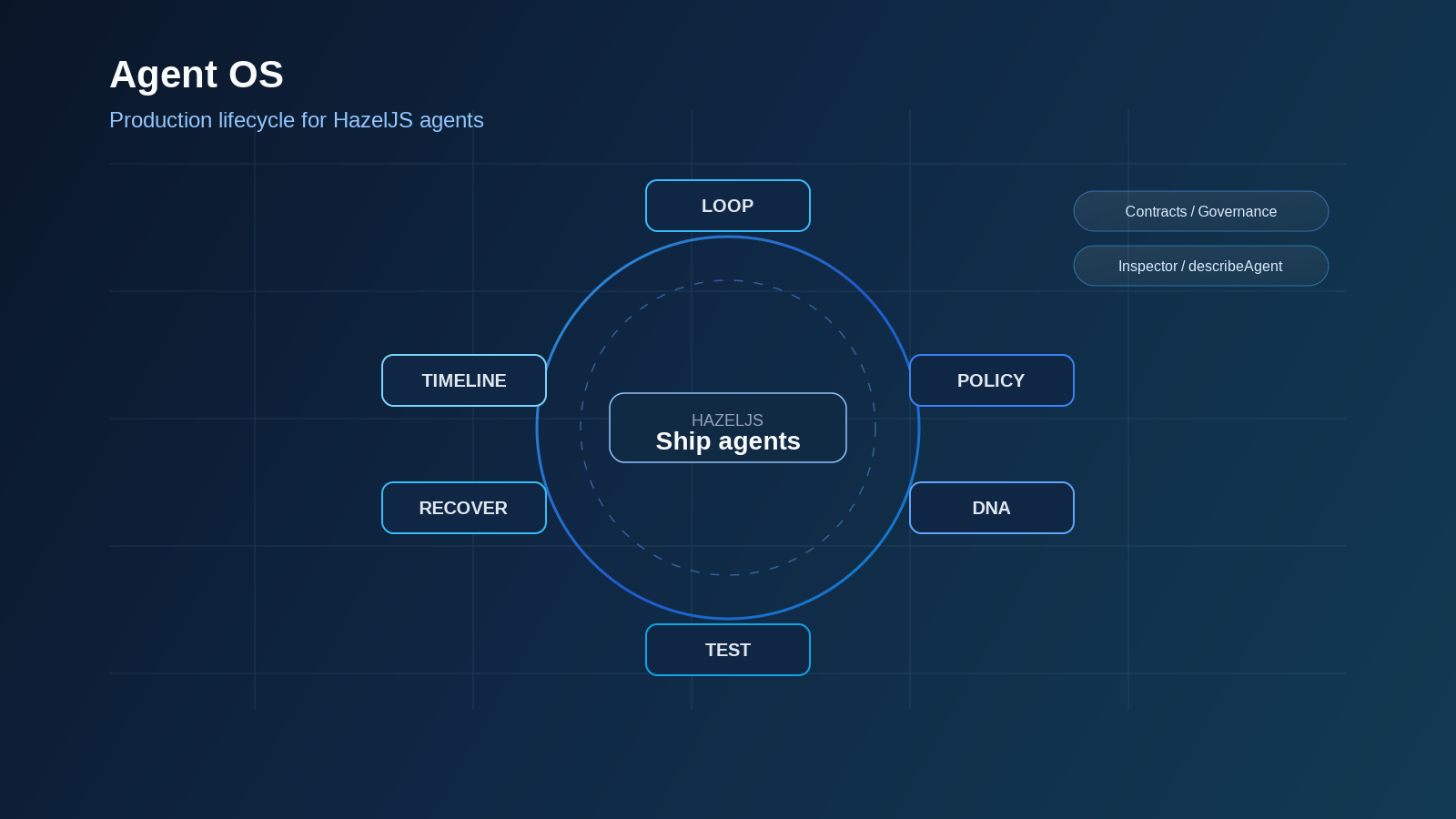
From intent to audit: Skillgate, Decision Runtime, Gatekeeper, and timelines for governing production AI agents.
AI agent governance is how an organization controls what agents may intend, decide, and execute. Soft prompt wording (“be careful with refunds”) is not governance. Governance is an enforceable path from intent to side effect, with an audit trail.
The control path
HazelJS maps the path:
Agent → Intent → Decision / Policy → Gatekeeper → Tool → Audit
| Stage | HazelJS component |
|---|---|
| Capabilities | Skillgate (OpenAPI → curated skills) |
| Closed-set judgment | Decision Runtime (@hazeljs/decision) |
| Authorization | Agent Gatekeeper |
| Packaging | Agent DNA policies |
| Audit | AgentRun timelines / hazel logs |
Important: confidence never means permission. Decision Runtime informs policy; Gatekeeper still authorizes side effects.
Why teams need this
Without governance:
- Agents inherit every OpenAPI write path from a giant spec dump
- “Policy” lives in Slack folklore
- Approvals disappear when the process dies
- Incidents cannot show why a tool was allowed
Agent OS treats governance as product infrastructure — the same way HTTP frameworks treat auth middleware as infrastructure.
Skillgate: shrink the capability surface
Skillgate turns OpenAPI/modules into governed skills with read / write / approval classification. The model only sees what you curated. That is capability governance before authorization.
Decision Runtime: closed-set judgment
decide() forces a closed set of options (for example auto-refund vs HITL vs deny). Useful for routing policy — still not a substitute for Gatekeeper on the tool that moves money.
Gatekeeper: fail-closed authorization
Outcomes per tool call:
allowdenyrequire-approval
Use CLI inspection before production:
hazel gatekeeper validate
hazel gatekeeper simulate
hazel gatekeeper explain
Pair with durable HITL (hazel approvals) so approvals survive restart.
DNA policies: ship governance with the agent
Agent DNA packages identity, tools metadata, and policies together. You version the contract the same way you version an app — then hazel apply reconciles it on hazeld. DNA is not the tool implementation; handlers stay in TypeScript or Skillgate.
Governance vs security vs compliance marketing
- Governance (this article) — policy path and audit
- Security — least privilege, secrets, isolation assumptions — see AI agent security
- Compliance products — HazelJS does not claim SOC2-as-a-service or prompt-injection immunity
HTTP headers, CSRF, and rate limits for the broader app stack live in the security guide.